Showing posts with label Latin. Show all posts

Tuesday, August 18, 2015

My Homeschool Curriculum Favorites


The past few years I've written a post around this time outlining our curriculum plans for the upcoming year.  ( Curriculum Choices (2013 - 2014) and Curriculum Choices (2014 - 2015) ) They were among my favorite posts!!  They're all about books and supplies and planners and programs and systems and books, books, books, books!!  

I was pretty bummed when I realized it would be repetitive and unnecessary to write a curriculum choices post this year; not much has changed.  On the other hand, I'm super excited at the fact that this is the first year I'm not really trying out anything new!!  For the past three or four years I've been researching programs, comparing methods, reading reviews from other moms, price shopping, and testing out new materials.  And we finally don't need to do that again this year because I've found what works for us and we're sticking with that stuff!  Yay!!   

When September rolls around, the "start" of the school year will lack the thrill that nerds like me get when diving into a new program or curriculum.  But in a way I'm looking forward to being back in the thick of it but feeling like it's "coming home" - being familiar and comfortable with all the methods and books and programs and not having to navigate anything new.  

Here are some of the programs that I love and that work for us.  So much so that we keep coming back to them year after year...  


(double digit multiplication in progress... the MUS way)

We've never used any other math program, so I can't compare Math U See to anything else.  I just know that so far it's worked for us.  It's a multi-sensory approach, so it can be a good fit for a family with children with different learning styles.  Lessons are taught via DVD, there's practice and review in each chapter,  concepts are taught using colored manipulatives, and you have the option of purchasing a CD of addition facts and skip counting songs.  Something for everyone.  

MUS's straight forward, systematic approach  especially works for my oldest who doesn't need bells and whistles.  He just wants to learn, practice, master the material, and move on.  He's perfected skip counting by every number from listening to the CD, and that was enormously helpful in learning his multiplication facts.  Math U See is a perfect fit for this kid.  

For my second son, Math doesn't come quite as easily, but he benefits a lot from the "tricks" that are taught for adding and subtracting with different numbers.  He also appreciates the application and enrichment activities included at the end of each chapter.  He's often hesitant to use manipulatives because he feels it's an indication of his "weakness" in Math, but I usually just have to remind him that it's called Math U SEE and that the manipulatives are part of the see-ing, and he capitulates.  Even though I think my second son would enjoy a math program that is in color and has more "fun" and engaging activities, Math U See seems to work well for him in that the straight-forward, no nonsense approach has nothing on the page to distract him.  

Finally, Math U See hasn't only been good for my kids... Math was one of my weakest subjects all throughout school, and I've been SO enormously grateful for some of the tips and tricks that I've learned from Professor Demme's DVD lessons.  Honestly, I've gotten much better at math by doing MUS with my kids!  Yay!  


I love Handwriting Without Tears.  But not because there are actually no tears involved... I love it because it's so systematic and simple.  I also love it because the workbooks are easy to use and once my "students" know the HWT method of forming each letter, I can let them practice independently.  I check their pencil grip and that's about it until they're done and bring their work to me for review.  

The first year I used HWT I bought the teacher guide (it was the Kindergarten level.)  I'm glad I did, because by reading through it I learned the how's and why's of their approach. In my opinion, if you read one of their teacher guides, you don't need to purchase any for the other grades.  Save your money and instead buy the HWT writing paper and notebooks/journals.  Because HWT uses lined paper that is different from the "regular" 2 solid lines with the dashed line in the middle, it's worth having some of their "method" paper on hand for extra practice. 

If you look into the HWT tears program, you will find that it can get a little gimick-y.  It is designed for large classroom settings and so you can *maybe* see why a preschool or Kindergarten teacher might need "Mat Man" to teach kids about where parts of the body are or a bunny puppet to keep kids engaged.......  However, as a homeschool mom, there are LOTS of things that HWT offers that I just don't need.  If you are thinking about purchasing some of the "extras" for a Kindergartner or first grader, I would recommend (in addition to the workbooks, extra paper, and notebooks) the wood pieces for building letters (great for tactile learners) and the blue mat and capital letter cards that go with them.  We've also had success using the slate chalkboard and the blackboard with double lines.   I also have a set of their letter and number wall cards that I put in plastic sheet protectors and keep in a binder for my preschooler to trace with a dry erase marker.  Obviously, all these things are extras, but I've appreciated having them for my younger kiddos.  


(Emergent Reader Series and Decodable Literature Series.)


Ugh.  Are you sick of me talking about these?  Sorry.  I have to!  Here's some of what I've already written...
...the things that truly set this series apart from other reading programs are the engaging stories and delightful illustrations. There are no fat cats sitting on mats in this series, but there are cats who nap in camping equipment and a cat detective who investigates mysterious tacks and tan sacks. The stories are equally suited to boys and girls, they often convey wholesome childhood experiences (think running through a field to play fetch with your dog or going to the amusement park with the whole family).  Several of the stories also feature (without fanfare or overtones of trying too hard to be "inclusive") children of different ethnic backgrounds and blended race families.  (These are not themes of the stories, but are portrayed beautifully in the illustrations.)  There are a handful of artists who provided the illustrations for the books, all of which are lovely.  There are no stick figures or foolish cartoon characters here.  The artwork is such that the child reading probably feels like he's reading a "real" picture book instead of a meticulously researched and planned out phonics-based reader.  
They are the absolute opposite of typical make-mom-want-to-gnaw-her-arm-off readers.  (Bob Books, I'm looking at you.).... The language and illustrations are truly enjoyable, even for adults; a mother won't feel compelled to bang her head against the wall as she sits by and listens.  
You can read my complete review of the Emergent Reader Series here.  (This was one of the one-time expensive homeschool purchases that I'm soooo happy I did early on.  The cost is justified by the fact that I anticipate using them with all my kids :) )


In all fairness, I have to tell you that we've only used this program for one year, but I liked it enough that I bought the next level and we're using it again for this upcoming year.  I had tried (and ditched) two different spelling programs before chatting with Erin enough to give AAS a go.  After one year, I can easily see how this program builds solid spellers.  It's in depth and thorough.  It teaches spelling and phonics rules from the beginning and young kids are quickly spelling words beyond CVC words.  

The teacher's guide is a must, but I was able to pick and choose which activities I used for each of the children in each lesson.  (My younger son benefited from the letter tiles, while my older son found that activity to be tiresome.)  

Note: we don't use All About Reading, but that hasn't hindered our progress through AAS.


Story of the World (Audio Books)


Pretty sure these are nothing new for most homeschoolers out there.  This will be our fourth year using STOW, but only our second year using the audio version of the books (read by another of our family favorites, Jim Weiss!)  The audio books were a game-changer for us.  They've made all the difference because we can listen to them in the car and so we're all getting a history lesson, instead of just the older kids.  I can't recommend this series, especially the audio versions, enough!  


  Maps, Charts, and Graphs


I love this Geography series and so do my kids.  They actually beg to do geography.  When I say "it's time to do grammar," and my son gets super exited, I know that he misheard me and thinks I said "geography."   (He hears what he wants to hear!)  The lessons in these books are short, but complete, followed by questions to practice the new skill just introduced (understanding various kinds of maps, charts, and graphs... duh!)  We've been using these workbooks for three (or maybe 4?) years and I've been so happy with them that I imagine that we'll keep using this series for as far and as in depth as it goes.  I believe there are 8 levels (one per grade level from 1 - 8th grade) 


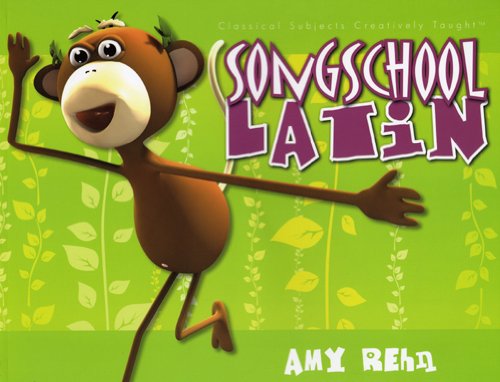
Song School Latin


I just LOVE this gentle introduction to Latin for kiddos.  The study center my kids attend use this program, but if we were ever to leave there, we'd still use it!  The vocabulary songs are so fun, the workbook is easy to use.  If you're considering starting Latin early, don't worry about starting with grammar and tricky stuff for your little ones.  This is a fun for kids, manageable for mom, introduction to the language.  After completing books 1 and 2 (my kids have done each book twice, actually) they'll be ready to start with Classical Academic Press' Latin for Children program with hundreds of vocabulary words and some basic grammar under their belts.  


 Teach Your Child to Read in 100 Easy Lessons


This definitely gets mixed reviews from moms, but if you're looking for no-nonsense, no frills, totally scripted reading lessons, this may be the program for you.  Letter sounds are taught progressively, unlike some phonics reading programs that require your kiddos to know all the letter sounds before they can start reading anything.  This program starts with simple sounds and simple words, then gradually adds in more sounds, including common blends and sight words.  Kids are reading "stories" from the very beginning.  I've successfully used this program while also using the Flyleaf Publishing books as supplements.  


I have been so happy with this step by step learn to draw program.  The books cover so many different topics that in the last few years, we've easily been able to choose drawing projects that coincide with specific things we're studying (animals and habitats, historical events, geography, etc...)  Also included are paragraphs for copy work (only my older kids use these since, again, the triple lines can be confusing for young Handwriting Without Tears users.)  I recommend these books for anyone interested in adding drawing to their weekly lessons.  We've certainly used ours a lot! 

Elemental Science (classical science program)

I'm tagging this on to the end here because even though we're not using it again this year, I really loved it :( If my boys weren't doing science at the study center, we would most definitely be doing Elemental Science again.  

This past year we did Biology for the Grammar Stage.  There is no text, but the parent guide provides the titles you need to complete the program.  The boys loved the student workbook as well as the scientific experiments and demonstrations.  I purchased the experiment kit, so we always had everything we needed and I wasn't left scrambling to try to find bizarro things around the house for experiments.  One of the best features of Elemental Science is that they serve homeschoolers of different methods.  You can choose their Classical approach (which we did, and can I mention again, we loved it?!), or their living books series for a more Charlotte Mason approach, or their lapbook-based program. 

I often hear moms wondering what to do for science, if anything at all.  For our first few years we just did a lot of nature study and interest-led reading (library book binges to the Nth degree...) but I decided last year we needed something a little more formal.  I heartily recommend the Elemental Science program, especially if you're leaning more toward a classical approach to your homeschool.  It's cyclical, as much of classical ed is, and if you stick with it, your students will cycle through biology, earth science and astronomy, chemistry, and physics approximately three times.  
  

Do you have any favorite educational programs that you love and keep coming back to year after year?  Or do you have any questions about mine?  Ask away!  I love chatting about this kind of stuff!!

Annnd... linking it up with Micaela at California to Korea.  Head on over there to check out her vision and mission for the year, as well as the books and stuff they'll be using this year in their west coast homeschool!

You may also like...


Wednesday, September 24, 2014

The New Latin for Weight Loss System!!

Please welcome the first and only sponsor of Ordinary Lovely, Latin for Weight Loss.  I have been considering using their system for my own personal weight loss goals for a while.  Now that they're officially on board at Ordinary Lovely, I'm definitely going to give it a whirl and will keep you updated on my progress.  I think you'll be quite impressed with their groundbreaking technique and encourage you to read on...


Here at Latin for Weight Loss, we believe that every man, woman, and child deserves a healthier lifestyle and the confidence that comes from having a little extra room in your toga.  Our groundbreaking system is guaranteed to help you eliminate eating, slim down, and regain the confidence that comes from denying yourself almost every single type of food.  

We are so certain that you'll eat less, lose weight, and love the program, that we are offering you a free trial through this blog affiliate.  To prove how serious we are about the quality of the Latin for Weight Loss System, we are sharing with this exclusive audience, the one and only tip you'll need for success:  Make all requests for food using the proper Latin vocabulary and grammar.

It's that simple.  Here's how it works.  When our bodies need nourishment, they send a hunger message to the brain.  The brain then converts that message into a request for food.  With the Latin for Weight Loss program, you will learn to deny your body the basics, like food and water, for rapid weight loss by re-programming your brain to only request food items using their appropriate Latin nomenclature and grammatically correct suffixes, of which there are nine hundred forty-seven thousand mind-boggling options.  

Let's take a look at the system in action...

Sallyentia* often gets hungry mid-afternoon.  In the past, she would have asked for a snack, would have received it, and would have eaten it, setting her back in her weight loss goals.  With our groundbreaking technique, Sallyentia's brain will struggle to convert the hunger message into a request for food because the Latin language is so bizarre and difficult to use, she will be conditioned to give up trying to ask for food and will be transformed into an individual who would rather go hungry than deal with the hassle of Latin. 

Here are some examples illustrating the genius behind the concept. You will see that by the time you are done mentally decoding the Latin words, the desire for food has past, or you have given in to frustration and have quit the pursuit all together.

"I would like a chocolatebitimusaerausiscum  baraeiaitimusasterulentus."

"May I please have a large bowl of iceariousorumbimustorius creamimimarumiaeumitius?"

"Where is the rest of the cookiearavisbimusaeitibunt doughabuntimusuntorum?"

"What does a girl have to do around here to get her hands on a bag of Doritosamascumaeitisbamusbantarius????????"

You can clearly see how the Latin for Weight Loss System is light years ahead of its competitors in setting clients up for weight loss success.   We are excited to send you our introductory DVD, Latin Grammar: Taking the Fun out of Falafels and Fondue and our bonus booklet of testimonials entitled How I Almost Learned Latin and Stopped Eating in Under a Week.

We are so confident that you will see immediate results with the program that we invite you to try this risk free offer for no cost using the code #sawitonafrustratedbyLatinmomblog#  Order within the next four hours, and we will also send you this plush robe.  It's the back-up plan to our groundbreaking weight loss system - the sleeves are sewn shut.  


If you are not completely satisfied with the Latin for Weight Loss DVD, return it to our distribution centers but keep the robe as our gift to you.  

We have maintained a long and meaningful relationship with many of our customers and look forward to the same with you once you try the Latin for Weight Loss System.  Just eat something before you call, because once you start attempting to request your meals in Latin, you will. never. eat. again.  And you will eventually tear your hair out in frustration and collapse on the floor because, after all, it's Latin.  Oh, and you're starving.

* Sallyentia is a fictional character from ancient Rome.  Her "supposed" weight loss and eventual demise are the typical results when using this program correctly.

Latin for Weight Loss is not a medically approved weight loss plan and is currently involved in several law suits in the third, fourth, fifth, eleventh, and eighty-eighth district courts to prove otherwise.  You should not begin a new dietary program without consulting your physician physician.  Togas can present a tripping hazard.  Side effects of the Latin for Weight Loss System of can include, but are not limited to, malnutrition, muscle weakness, loss of consciousness, and death.  Note: it has been concluded by some studies that food and water are usually essential to health, wellness, and life.  Clients who abandon the program often suffer from a binge-eating rebound period.  Always consider the risks and benefits before beginning a new wellness program.  Latin for Weight Loss is a limited liability company and is actually not responsible for anything that may happen to its clients while using the system, or afterward.  And there really is no DVD or robe, though it does look cozy, doesn't it??  

Tuesday, September 23, 2014

Adding a Little Extra Tech to Our Homeschool (Don't Judge Me...)

Three years ago when we started homeschooling, I would have balked at the idea of employing electronic devices to teach my children.  I had done my reading and planning and we were going to "do school" with hands-on activities, real world experiences, and "living books" (which we would read while sitting next to a babbling brook and eating freshly picked wild fruit, of course.)

Things are a little different now, the most obvious of which is I have two more children than I did when I first dreamed up my dreams, and we've taken a little more "classical" approach to school.  It turns out, my perfect blend of Charlotte Mason/unschool-ish/unit studies doesn't actually work for us.  We still do those nature-y/hands-on/real world things as often as possible (which is fairly often, thankfully)  but they are not the backbone of our homeschool.  They are more like the happy side effect of short lessons (which IS a backbone of our homeschool) and the freedom to set our own pace and schedule.  

A couple years ago, my mom introduced us to the world of the iPad.  I was skeptical at first, but we quickly put it to good use and continue to use them, almost exclusively for school and audio books, daily.  This year I've been even more intentional about including  gadgets and screen time as part of the curriculum.  I really need "help" covering all my bases during lessons time, so I'm not above using technology as a servant.  The kids like it for the variety and I like it because it helps keep the learning humming along even when I'm not sitting next to a child in a one-on-one lesson.   (You don't have to link to any "screen time" articles in the comments, I've already read them and am aware that my children are more likely to be over-tired, obese, violent delinquents with every on-line Latin drill they complete.   I have been informed and have signed the waiver...   Man, can you believe they let people like me have kids???)    

So here's what we've been "using" so far.  Nothing earth shattering, but all very, very helpful to us :)  

Number (1) Most helpful: A new thing I call AUDIO LESSONS.  I put that in caps to emphasize how fabulous this has been so far this year.  It's part of my new homeschool philosophy: "go audio whenever you can."  My mom, who's good at this kind of stuff (thanks mom!) helped me get our curriculum cd's onto our hard drive.  I use Windows Media Center to create new playlists for the boys about once a week.  "Audio Lessons"  is part of their daily schedule.  It's an actual academic "requirement," not fun time at the computer.  


When it's on their schedule they have to listen to their playlist at least once, then review the material with me. They use a headset so that it doesn't disrupt the other lessons going on.  It's really been a game-changer around here because in the past, if I was working closely with one boy, the other one would often just wander around being distracting.  Now, he's engaged in his "audio lessons."  Dominic in particular learns songs and chants very easily and I believe this is going to be very beneficial to him; already he's learned more than I think he would have if I was just giving him plain old instruction.

Here's an example of Dominic's audio lessons playlist this week:

from the Math U See skip counting/addition facts CD:
     Skip Counting by 2's (both versions)
     Skip Counting by 5's (both versions)
     Addition Facts +8's
     Addition Facts +9's
from Song School Latin (books 1 and 2)
     vocabulary songs from Chapters 3 and 5 (book 1)
     present tense verb endings song (book 2)
     present tense conjugation of esse song (book 2)
     1st declension noun endings chant (book 2)
from First Language Lessons for the Well-Trained Mind: Audio Companion for Levels 1 & 2:
     "The Goops,"  poem by Gelett Burgess
     pronouns chant
     state of being verbs chant
     state of being verbs song


So that's what Dominic's got right now.  Aaron is only listening to skip counting by 3, 4, 6, 7, 8, and 9 at this point in anticipation of starting multiplication around the end of the second quarter.  The lessons change every week - I take off old tracks and put on new ones to include new vocab, math facts, grammar rules, etc...  We'll also use it for poetry memorization as well as some science and geography memorization as well.  


(2) Good ole Old-Fashioned Kindle (I say old fashioned because I recently heard that they are only going to manufacture touch screens from this point on and I really recommend the old ones that are button-operated and aren't connected to the Web.)  

I'm so excited about this, I have to shout it from the mountain tops:  AARON HAS BEEN INDEPENDENTLY READING AND ENJOYING HIS FIRST BOOK!!!!!   I'm talking about the first book that he's reading on his own initiative!!  (but then I chat with him about it to assess/confirm comprehension and call it a lesson.)  Anyway, he's reading  The Boxcar Children on the old fashioned Kindle.  He likes it because it's "cool" and he can hardly believe that I'm letting him do it.  And I like it because he can't accidentally swipe the pages around and get lost or confused and he can't get on-line and ruin his childhood with scary on-line things.  I chose to let him use the Kindle in the first place because when your non-reader hints that he's interested in reading something, you make it happen immediately for $3.21 instead of waiting a few days for a library request to come through...  


Now that I've allowed my first book for kids on the Kindle, I'm wondering if i should consider the Amazon Kindle Unlimited subscription (and just make it official that screens are taking over my children's lives...)  Does anyone know if the Unlimited library has a decent selection of easy reading kids books?

3) Headventure Latin vocabulary drills (coincides with Latin for Children from Classical Academic Press)  So far, this has been hugely helpful to us.  Aaron and I review his vocab together a few times, then he sits down at the computer and does a couple rounds of Latin to English and then vice versa, reporting to me on his scores each time.  Once he gets enough A's, he's done for the day.   (Aaron's in Level B now, and what's available on-line is very limited.  It looks like they'll be adding to each level though.  Level A seems to have many more "fun" activities.)  


(4)  Math U See website drills.   The boys use these occasionally, but I have to admit, they're pretty lame.  I really like the MUS curriculum (and the lessons themselves are on DVD, so that's a bonus to me!)  but what they really need is an iPad/android app that allows students to play math games using the MUS method and order of instruction.  For now, the on-line drills will have to do...  (We also use their on-line worksheet generator a lot.)

(5)  Stuff you already know about - Netflix and Amazon Prime.  But maybe you didn't know how many educational programs are "free" (with membership) on-line.  For example, they have tons of NOVA on Amazon Prime :)  Also, now with Amazon Prime's new free music, you can basically decide in the morning which new classical composer you want to study and then start listening right away!  

(6)  And of course, we're still using the iPads.  I've found a few new-to-me apps that I can recommend: (don't forget, I usually get all these apps for free with the notifications from Smart Apps for Kids)  

Marble Math Jr.  - the boys really enjoy this game that combines math practice with a marble maze.  

Art Authority K-12 - this is going to be a wonderful for our art appreciation this year!  You can view the "gallery" either by artist, or by era/style.  The collection of artwork is very extensive but was assembled with young people in mind, so no nudes :)   I like this app so much I may end up writing about it more when we study our first artist this quarter.  It's worth checking out if you do art study at home and would appreciate having a veritable museum at your fingertips!

Handwriting Without Tears Wet, Dry, Try - if you use HWT curriculum I highly recommend this app.  Because HWT uses non traditional paper and method-specific strokes, etc... my kids often get frustrated when writing or tracing letters in other apps.  They're usually done differently than they had been taught.  It's nice to have an app that reinforces the method they use during lessons.  I also like being able to leave behind the dusty chalk, rags, and slates for the less-dusty iPad :)  

(7) Finally, as I mentioned before, I'm replying heavily on anything else that I can get an "audio" version of.  It's not my ideal situation, but I just don't have the time to read everything that needs to be read out loud.   So, books on CD or Audible?  Yes.  Among other things, we're using Story of the World, Volume 1: Ancient Times Audiobook CD  (Susan Wise Bauer), D'Aulaires' Book of Greek Myths from Audible (the list of narrators on this production is impressive!!  Paul Newman, Matthew Broderick, Sidney Poitier!)  and Tales From the Odyssey CD Collection  (Mary Pope Osborne).  It's really been a blessing to be able to "do history" while driving in the car.  Both the kids and I are really captivated by it!  I could never read each chapter two or three times, but in the car it's totally reasonable to replay a couple tracks and by the time we get where we're going we all know quite a bit more about ___fill in the blank with your favorite topic using your best dramatic Jim Weiss imitation___.  


*   *   *   *   *   *

Tech time can never replace real books, activities, and time spent learning through human interaction, but as I have more and more on my plate each year, I'm open to new ideas for making home learning fun and sometimes more feasible.  What ways do you use gadgets, screens, and technology to aid (but not invade!) your homeschool?  


*   *   *   *   *   *

You might also like to check out...


Thoughtful Apps for Thoughtful Pre-Schoolers

Wednesday, August 21, 2013

Curriculum Plans, 2013-2014

September is nearly here... fresh notebooks, unmarked workbooks, crisp covers, full boxes of crayons, and brand new No. 2 pencils. I'm dizzy with delight!  I love back to school time!  I love new school supplies and books - there's so much promise. And I love school plans - there's so much possibility. 

And that's important to remember.  A plan is what's possible. It's not what will definitely, absolutely, without a hitch transpire.  It's just a plan.  It's not an anvil hanging over my head, waiting to drop at the first sign of not happening.  But for me, having a plan at the beginning is important because it offers direction and an element of certitude that I may need to rely on in the future: "yes, I did actually think this through at one point and believed it was not only possible, but was good." 

I love reading about other home schooler's thoughts, and book recommendations, and plans.  And I'd love to chat about our choices if you want to comment here!  But, I say this to myself as much as to anyone else - feel confident in your decisions; use what works for you; don't keep looking for the next best thing if you've already got something that's working well; you can't use every wonderful program out there; make changes when necessary; don't compare kids and curricula; enjoy your kids' education.

There's a million different ways to homeschool.  Here's what works for us.  Here's how we've enjoyed lessons so far. Here's what we're planning on... 


Aaron, Grade 2


Math

Math U See, Beta Level (This level looks fun!  I can't wait to start it, but we are still finishing up the end of the Alpha Level - you can read about that and our summer school here.)

My Book of Telling Time, Learning About Minutes, from Kumon. 
Telling Time With the Judy Clock, and Geared Student Clock
I bought these things last year, but Russ teased me saying, wasn't I smart enough to teach the kids how to tell time without fancy workbooks and stuff.  So I returned them aaaaannnnnnnnnd... no one learned how to tell time last year.  So we're taking the workbook route this year - and the iPad route - we'll use Freefall Time for extra practice.

Handwriting

Handwriting Without Tears, Printing Power

Copy Work - in the past, this has included portions of books we've read and songs we've learned.  This year, I also purchased Quotable Saints to use for copy work.  

I think I am going to start cursive with Aaron in our second semester.  But I'm not crazy about the HWT cursive program... so I'm going to try it on my own, or use a generic cursive book. I'd appreciate any suggestions or recommendations on this one!  

Reading

Still working on proficiency.  We'll continue to work our way through the Books to Remember, Decodable Literature from Flyleaf Publishing.  I've reviewed the series here - I LOVE them, so if you're looking for K - 2 readers, check 'em out!  

We'll probably also do plenty of Frog and Toad, which Aaron really enjoys.  

Language Arts (for extra practice)

Language of God, Level A from Catholic Heritage

Daily Language Review, Grade 2 - despite the title, we probably won't do this daily, because that just sounds maddening - doing one or two questions a day - We'll probably try to finish a lesson in a week's time, even in one sitting if possible.  

Spelling

Grammar of Spelling, Grade 2 - I'm really looking forward to checking out this series.  I was attracted to the fact that it's no frills and that it's reproducible.  So, if we like it, I'll stick with the program (I think it goes through 6th grade?) and I can use it for the other kiddos.  (psst - I linked to Amazon, but it's cheaper at Rainbow Resource Center.)


Dominic, Grade 1

Math

Math U See, Alpha Level (I have a suspicion that we'll be taking it very slowly, and using the MUS on-line worksheet generator for a lot of extra practice.  And that's ok!  I'm trying to remember not to compare my own kiddos, let alone bringing their friends into the "game.")  

My Book of Easy Telling Time, Learning About Hours and Half Hours, Kumon.
and the Judy Clock stuff... (see above explanation for the necessity of fancy telling-time equipment)

Handwriting 

Handwriting Without Tears, My Printing Book 

Copy Work, I'm thinking this year it might be nice to use the poems he memorizes for copy work, but I haven't decided yet. 

Reading

Again, we're taking it slow.  We'll keep working through the CHC Little Stories for Little Folks AND....
  
I'm so excited!  I finally decided to buy the Emergent Reader Series from Flyleaf Publishing!!!!!  If they are as great as the Decodable Reader series, you can bet I'll be writing up some fabulous and gushing and bordering on Flyleaf Publishing Stalker reviews.

Language Arts (for extra practice)

Daily Language Review, Grade 1


Spelling

Last year with Aaron, I used the first grade spelling lists from AAAspell.com.  I planned on using the same for Dom, but at the last minute I decided to buy Building Spelling Skills, Grade 1. Knowing Dominic, I think he'll do better with a workbook to use and I think it will be better for him to start off with the shorter lists.  This book starts with lists that are only 5 words and the lists grow as the book progresses.  


Combined Lessons for both boys:
* indicates subjects they will cover at tutoring with review at home

* Grammar

English for the Thoughtful Child, Volume 1

* Latin

Song School Latin, Books 1 and 2 

* History

Story of the World, Volume 4

* Literature

Book list from Tapestry of Grace, Year 4, Lower Grammar Level - typically follows along with, and is related to, the History lesson.  (The Study Center the boys attend follows the Tapestry of Grace classical homeschooling curriculum - so we're along for the ride as far as history and lit are concerned.)


Science

In the Fall the boys will take two classes at our local science museum - I think the topics are sort of physics related - simple machines and how to move stuff by natural and man-made means. Right up their alley! 

In the Spring, we'll very casually read aloud from Exploring Creation With Astronomy, from Apologia, and perhaps do a few experiments here and there.  

Nature Study - we'll keep looking for flora and fauna (and rocks, of course) around the neighborhood, collecting what we can for our nature tray, using our field guides, and adding to our Nature Notebooks.  

Geography

Daily Geography Practice, Grade 3  

We've also been working on identifying the continents, oceans, large countries, and other places of interest.  I'm not sure where I'll take this, but I'm hoping to add some map memorization in with our other memory work.  

Religion

Jesus Our Life, Faith and Life Series 

Child's Bible History, Rev. F. J. Knecht, D.D.

New Catholic Picture Bible - We read through this last year, about a story a week, and I was just going to do it again this year.  But I obtained a copy of The Children's Bible through a curriculum swap, so we'll probably use parts of it also.

The New St. Joseph First Communion Catechism - Well, actually, we're still waiting to hear if Aaron will be able to make his First Communion this year, but we'll be starting Sacrament prep so that he can receive his First Reconciliation at our parish. 

The Weight of a Mass, a Tale of Faith,  Josephine Nobisso

The King of the Golden City, Mother Mary Loyola

Narration

I typically only ask for narrations after we read Bible stories. This year I may also consider using them as we read some of the other books for religion, and perhaps for the Apologia Astronomy.  

Poetry and Other Memory Work

A year and a half ago I would have scoffed at the idea of memory work but it's actually become a significant part of our school work.  In the future I may consider a program like Classically Catholic Memory.  For this year, we are just going to wing it and use our poetry anthologies and these CD's:

World Geography Songs
States and Capitals Songs
Grammar Songs
Math U See Skip Count CD
First Language Lessons, Level 1 and 2, Companion CD
Audiobook of Robert Louis Stevenson's A Child's Garden of Verses
Favorite Poems for Children (Classic Literature with Classical Music)

Art

Last year I found that instead of one artist a month, we did better with one a quarter.  This year we will study American artists Mary Cassatt, Winslow Homer, Georgia O'Keeffe, and Norman Rockwell.  "Studying" an artist involves library books and picture study using prints from wall calendars. (TIP!  I get current year calendars in the summer discounted at 50% or more from calendars.com)  We also try to do an art project in the style of the artist.

For drawing, we use the Draw Write Now Series.

Music

Like art, we'll study a new composer each quarter.  We're pretty much going in chronological order - last year we covered the Baroque and early Classical period.  I haven't decided for sure yet, but I think this year we'll focus on Beethoven, Wagner, Tchaikovsky and Brahms??  Maybe?  As for resources, I don't have anything finalized yet, but in general, I recommend the Classical Kids series of stories on CD, the Masters of Classical Music series (because it covers all the well-known favorites of each composer), and the Music Masters series which includes music and short biographies.  And library books!

For singing we'll do the same as last year.  We'll learn patriotic songs, folk songs, and hymns.  For patriotic songs I like Wee Sing America (even if you don't go for children's chorus recordings in general, I still recommend this because the words and pronunciations are very clear and they sing several verses of the songs that most people only know the first of), for folk songs we've used the easy piano book Go In and Out the Window, and for hymns I borrowed a hymnal from church and made some photo copies - for personal use.  

The assessment we're using this year is the California Achievement Test.  Hope I don't regret it...  


Ruth, "pre-K" 
Ruth enjoys being part of the school day, so she gets some lessons to work on if she shows interest.  Last year she joined in for music, art, poetry and memory work, religion, and science. I'm assuming it will be the same this year.  She has a handwriting book and a vast array of letters and numbers activities.  Anything else she learns is probably because she overheard it while she was looking for leftover breakfast food under the table ;)  


We'll also continue to use our fancy shmancy iPads!  Here's my post with the apps best suited for our school lessons. 
Whew.  I think that's it.  We've already started this year (I'm calling summer school "early first quarter") and I'm hoping to finish at the end of May.  Dragging on into June this past year was just too painful for words.  We'll probably take off a good chunk of time at Christmas and Easter.  And we'll see what we can hold together around the time our sweet baby is born in January! 


Questions?  Comments?  I love this stuff!  I could chat books and resources all day, so let's talk! 
And thanks to Micaela at California to Korea for the fun (for us nerds) linkup!

Related Posts Plugin for WordPress, Blogger...